The Newfangled Way: A Practical Approach for Modern Workflows
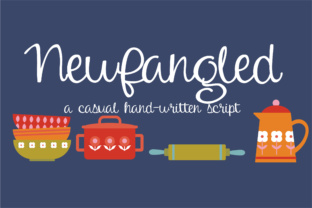
In a world saturated with methodologies and buzzwords, the concept of something Newfangled often gets dismissed as fleeting novelty. Yet, a true Newfangled approach is not about chasing the latest trend for its own sake. It represents a deliberate, practical integration of a new tool, technique, or perspective into an existing system. It's the thoughtful adoption of an innovation—like a distinctive, full-lettered cursive script with a particularly cute lowercase "g"—because it genuinely improves a process. The value lies not in the newness itself, but in how it is woven into the fabric of your work to enhance planning, execution, and outcomes.
Understanding Newfangled in a Process Context
A Newfangled element is any recent addition that changes your workflow for the better. It could be a software plugin, a revised company procedure, a unique font for branding, or a personal productivity hack. The critical distinction is that it serves a function within a broader sequence of actions. Where does it fit? Typically, it inserts itself into one of three phases: the preparatory stage, the active execution stage, or the refinement and review stage.
Consider that hand-written cursive script. A designer might discover it and deem it Newfangled for their projects. Its integration isn't merely about using a new font. It begins in the preparation phase: assessing its compatibility with brand values (does the cute "g" convey the right tone?), testing its readability in various mediums, and ensuring licensing for commercial use. During the execution phase, it becomes a specific asset applied to headline designs or logo treatments. Finally, in the review phase, its impact is evaluated—did it achieve the desired aesthetic effect and user engagement?
Strategic Integration Before a Project Begins
The most powerful use of a Newfangled idea often happens before any real work starts. This is the planning and tool-selection phase. Here, you evaluate potential new additions against your current toolkit and future goals. For a content team, adopting a Newfangled collaboration platform requires analyzing how it will interact with existing editorial calendars, asset libraries, and approval chains. Questions of preparation are key:
- What training or resources are needed for smooth adoption?
- Does it require data migration from old systems?
- How will it affect the initial timeline and budget?
This upfront diligence prevents the common pitfall of a disruptive, poorly-integrated novelty. It turns the Newfangled into a calculated upgrade.
Workflow Example: Adopting a New Asset
A marketing manager finds a novel analytics dashboard (Newfangled to their team). Instead of mandating its immediate use, they plan its integration. First, they identify which team members (SEO, content, social) will interact with it. Next, they schedule a session to map how data from this new dashboard will feed into existing weekly reporting templates. They establish a one-month parallel run, comparing outputs with the old system to ensure consistency and quality control. This process-oriented rollout minimizes friction and leverages the new tool's strengths from day one.
Operational Use During Active Execution
When a project is live, a Newfangled component should act as a natural enhancer, not an obstacle. Its role during execution is to improve efficiency, consistency, or creative output within the ongoing workflow. For a freelance writer using that unique cursive script, it becomes a designated stylistic choice for client logo drafts. It interacts directly with other tools: the font file must work seamlessly with their graphic design software, and its application must follow a consistent rule (e.g., "use only for premium client proposals") to maintain professional organization.
Practical implementation here is about accessibility and rules. The new element should be easily accessible within the workflow—placed in a shared drive, installed on all relevant machines, or added to a style guide. Brief, clear guidelines on its use prevent arbitrary application and ensure it adds value reliably.
Factors for Smooth Execution
- Usability: Is the Newfangled tool or resource intuitive enough to use under time pressure?
- Interoperability: Does it export, save, or share data in formats that your other tools accept?
- Quality Control: Can you easily check that its output meets your standards (e.g., the font renders correctly on web and print)?
Refinement and Long-Term Adaptation After Completion
The post-project phase is where you assess the Newfangled element's long-term viability. Did it deliver on its promise? This evaluation is crucial for deciding whether it becomes a permanent part of your repertoire or a one-time experiment. Review its impact on the final outcome, the feedback from collaborators or clients, and any unforeseen complications it introduced.
For a small business owner who implemented a Newfangled inventory management app during a product launch, the review would focus on hard metrics: time saved, error reduction, and compatibility with their accounting software. This data-driven review informs whether to renew the subscription, train more staff on it, or look for alternatives. This cycle of integrate, use, evaluate ensures that your workflow evolves intelligently, retaining only what is genuinely helpful.
Practical Tips for Integrating Newfangled Elements
To make any new addition work for you, follow a disciplined integration approach.
- Define the Specific Gap or Enhancement: Clearly articulate what the Newfangled item is meant to improve. Is it speed, creativity, accuracy, or collaboration?
- Map the Touchpoints: List every person, tool, and decision point in your current process that will interact with it. Visualize this as a workflow diagram.
- Create a Transition Protocol: Instead of a full switch, plan a phased adoption. Run a pilot on a single project or with a small team. Compare results with your baseline method.
- Document Its Use: Add it to your internal guides, style sheets, or tool directories. This formalizes its place and prevents it from being an informal, forgotten novelty.
- Schedule a Review Point: Set a future date—after three projects or six months—to critically assess its continued value. Be willing to retire it if it no longer serves.
Beyond Tools: Integrating Newfangled Concepts
Sometimes, what's Newfangled is a concept or method, like a new prioritization framework or a creative brainstorming technique. Integration here is about mental workflow. For an educator adopting a novel learning activity, integration means adapting lesson plans to include it, training oneself in its facilitation, and observing how it interacts with existing assessment methods. The principles remain the same: preparation, seamless execution during class time, and post-lesson evaluation of student engagement and outcomes.
Building a Workflow That Embraces Useful Innovation
A healthy, productive workflow isn't static; it's adaptive. Cultivating a mindset that systematically evaluates and integrates Newfangled improvements is a competitive advantage. It allows you to harness genuine innovation without falling into chaos. Whether you're a blogger testing a new content format, a developer implementing a fresh library, or an entrepreneur evaluating a unique marketing channel, the structured process is your safeguard.
Remember, the goal is not to have the newest things, but to have the most effective and coherent system. The cute lowercase "g" in that cursive script is charming, but its real worth is proven when it consistently enhances your design communications, resonates with your audience, and becomes a reliable, valued part of your creative asset library. By focusing on process-oriented integration, you ensure that every Newfangled addition earns its place, supporting your long-term goals and elevating the quality of your work.